Curious how the first Christians prayed? The early church’s approach to prayer is both fascinating and instructive. Their actions reveal a strong dependence on God, unity among believers and a practical commitment to daily spiritual life.
Also read: What Does the Bible Say About Prayer?
Did the Early Church Pray Together?
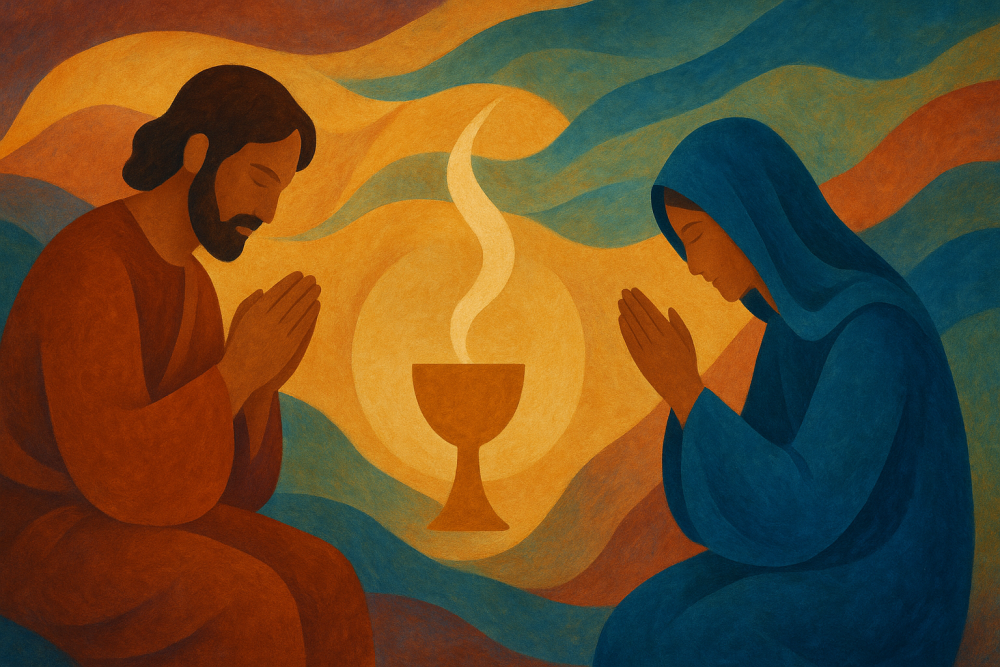
Absolutely. Group prayer was central. After Jesus ascended to heaven, the disciples didn’t scatter. Instead, they gathered with one mind:
All these with one accord were devoting themselves to prayer, together with the women and Mary the mother of Jesus and his brothers. (Acts 1:14)
Acts 1:14
This “one accord” language shows prayer was communal, not just individual. The early Christians leaned on each other and reached out to God together, often in homes or public spaces.
How Often Did They Pray?
The Book of Acts makes it clear that prayer was not an occasional activity for the early Christians, it was woven into the rhythm of everyday life. Prayer shaped their days, their decisions and their responses to difficulty.
We see this continuity with Jewish prayer practices when Peter and John went to the temple at a set time of prayer:
“Now Peter and John were going up to the temple at the hour of prayer, the ninth hour.” (Acts 3:1)
Acts 3:1
Set hours of prayer were already familiar within Jewish life and the early church did not abandon this structure. Instead they carried it forward and infused it with new meaning through their faith in Jesus.
At the same time, prayer in the early church was not limited to fixed times. Believers prayed spontaneously and urgently, when faced with persecution, uncertainty, danger, or opportunity. Prayer was both planned and responsive. Whether in the temple, in homes or in moments of crisis, prayer was their first instinct, not a last resort.
They prayed often – daily, corporately, and individually because prayer was central to how they lived out their faith.
Why Did They Pray?
Prayer served many purposes in the life of the early church, reflecting both their dependence on God and their growing confidence in His presence among them.
Worship
Prayer was an expression of praise and awe. Believers regularly thanked God for His faithfulness, His power, and the work He was doing among them. Worship reminded them who God was and anchored them in trust.
Guidance
The early church prayed when facing important decisions. One clear example is the selection of Matthias to replace Judas. Rather than relying solely on logic or popularity, they sought God’s will through prayer, trusting Him to lead.
Power and Boldness
Prayer was closely linked to courage. When opposition increased, the church did not pray for safety or escape, but for boldness to continue speaking about Jesus.
After Peter and John were threatened for preaching, the believers gathered to pray together:
“And when they heard it, they lifted their voices together to God and said, ‘Sovereign Lord, who made the heaven and the earth and the sea and everything in them…’” (Acts 4:24)
Their prayer focused on God’s sovereignty, not their fear. The result was remarkable! Renewed boldness, unity and even the physical shaking of the place where they met. Prayer reoriented them toward God’s power rather than their circumstances.
Healing and Help
Prayer was central when people were sick, suffering, or in danger. The church prayed for healing, protection, and endurance – both for themselves and for others. Prayer was an act of love and solidarity, especially in times of persecution.
Was Prayer Effective in the Early Church?
The early Christians firmly believed that prayer changed things and the Book of Acts repeatedly shows that it did.
When Peter was imprisoned, the church did not despair. Instead, they prayed persistently:
“So Peter was kept in prison, but earnest prayer for him was made to God by the church.” (Acts 12:5)
Acts 12:5
God responded in an extraordinary way, sending an angel to free Peter from prison. This was not an isolated incident. Again and again in Acts, prayer leads to visible outcomes:
- Deliverance from danger
- Clarity and guidance in uncertain moments
- Courage to speak about Jesus despite opposition
- Spiritual power and unity
- The rapid spread of the gospel
Prayer did not always remove hardship but it consistently brought God’s presence, direction, and power into the situation.
How Did They Pray?
Prayer in the early church was rich and varied. There was no single formula or rigid structure. Instead, prayer flowed naturally from their shared life and faith.
- Aloud in groups, lifting their voices together in unity
- In corporate worship, using Psalms, Scripture, and hymns
- Spontaneously, especially in urgent or emotional moments
- With fasting, seeking deeper focus and dependence on God
- Through the laying on of hands, particularly when praying for individuals
What stands out most is not the method, but the posture of their hearts. They prayed with faith, expectancy, and togetherness. Prayer was not a ritual detached from life—it was deeply connected to real people, real struggles, and real hope.
A Pattern Worth Recovering
The prayer life of the early church challenges modern believers. Their prayers were frequent, honest, and grounded in trust. They expected God to act not always in predictable ways but always in ways that aligned with His purposes.
For the early Christians prayer was not simply about asking for help. It was about staying connected to God, listening for His direction, and participating in what He was doing in the world.
What Does This Teach Us?
Early church prayer was simple, bold and rooted in relationship – both with God and each other. They prayed whenever needs arose, trusted God to act and made prayer a staple of daily church life. This ongoing connection with God fuelled the movement that changed the world.
Want to experience prayer like the early church? Gather with others, bring your needs honestly before God and believe he wants to answer, just as he did for them!