Deborah: Prophetess, Judge, and Leader in Israel
Deborah stands out in the Bible as a unique and courageous leader. She was both a prophetess and a judge during a turbulent period in ancient Israel, a time before Israel had kings. Her story is recorded primarily in Judges 4 and 5, where she emerges not only as a wise decision-maker but also as a woman of deep faith and conviction.
Historical Context of Deborah’s Role
The period of the judges followed the Israelites’ settlement in the Promised Land. It was marked by a repeating cycle: Israel would turn from God, face oppression, cry out for help, and then God would raise up a leader to deliver them. As described,
“The children of Israel did that which was evil in Yahweh’s sight, and forgot Yahweh their God, and served the Baals and the Asheroth” (Judges 3:7).
Judges 3:7
In this era, judges were not kings, but they provided spiritual, legal, and military leadership. While it was unusual for a woman to hold public authority in that culture, the Bible notes women like Miriam could be prophetesses (Exodus 15:20), offering guidance and inspiration from God.
Deborah as Judge and Prophetess
Deborah is introduced as “a prophetess, the wife of Lappidoth, [who] judged Israel at that time” (Judges 4:4).
Judges 4:4
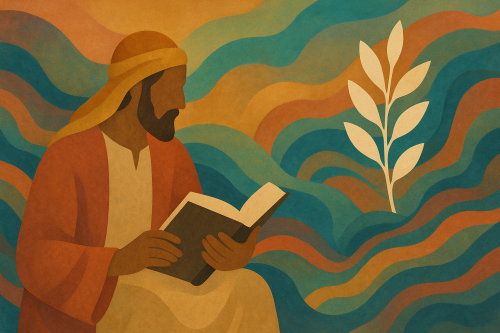
She was respected for her wisdom, and people would come to her as she sat under her palm tree to settle disputes and seek guidance:
She lived under Deborah’s palm tree between Ramah and Bethel in the hill country of Ephraim; and the children of Israel came up to her for judgment. (Judges 4:5)
Judges 4:5
Her position as both prophet and judge made her a bridge between God and the people, leading not by force but through discernment, faith, and justice.
Deborah’s Leadership in Battle
At a time when Israel was “mightily oppressed…for twenty years” by a Canaanite king and his military commander Sisera (Judges 4:3)
Judges 4:3
Deborah summoned the Israelite general Barak and delivered God’s call to action. She told Barak that God commanded him to gather troops and promised that God would deliver Sisera into their hands. Barak agreed to go only if Deborah would accompany him, to which she replied:
“I will surely go with you. Nevertheless, the journey that you take won’t be for your honor; for Yahweh will sell Sisera into a woman’s hand.” (Judges 4:9)
Judges 4:9
The battle unfolded just as Deborah had prophesied. When the time came, she told Barak,
“Go; for this is the day in which Yahweh has delivered Sisera into your hand. Hasn’t Yahweh gone out before you?” (Judges 4:14).
Judges 4:14
After Sisera’s defeat, a woman named Jael completed the victory by bringing down Sisera himself, fulfilling Deborah’s word.
The Song and Legacy of Deborah
Following the victory, Deborah and Barak composed a song (Judges 5) that celebrated God’s deliverance and the courage of the leaders and people. One line powerfully captures Deborah’s sense of calling and motherhood for Israel:
The rulers ceased in Israel. They ceased until I, Deborah, arose; Until I arose a mother in Israel. (Judges 5:7)
Judges 5:7
Their song recalled God’s faithfulness, the willingness of some tribes to step forward, and the blessing on Jael for her decisive action. The result of this deliverance was forty years of peace (Judges 5:31).
Judges 5:31
What Deborah’s Story Teaches Us
Courage and leadership can come from unexpected places. Deborah’s role shows that God calls and equips women (as well as men) for significant leadership in His work.
Trust in God’s promises is essential in times of uncertainty. Deborah’s faith-and her willingness to act-brought hope and direction to a nation in fear.
Collaboration honors God. Deborah, Barak, Jael, and the willing tribes worked together in obedience, each playing a crucial role as God led His people to freedom.
Deborah’s story continues to inspire people facing challenges-especially those called to lead, encourage, and trust God’s guidance in difficult moments.