Many wonder how the first followers of Jesus prayed as a group. What did their gatherings look like? Did they follow rituals or was their community prayer more spontaneous? Let’s dig into Scripture and history to build a clear picture.
What Did Group Prayer Look Like in the New Testament?
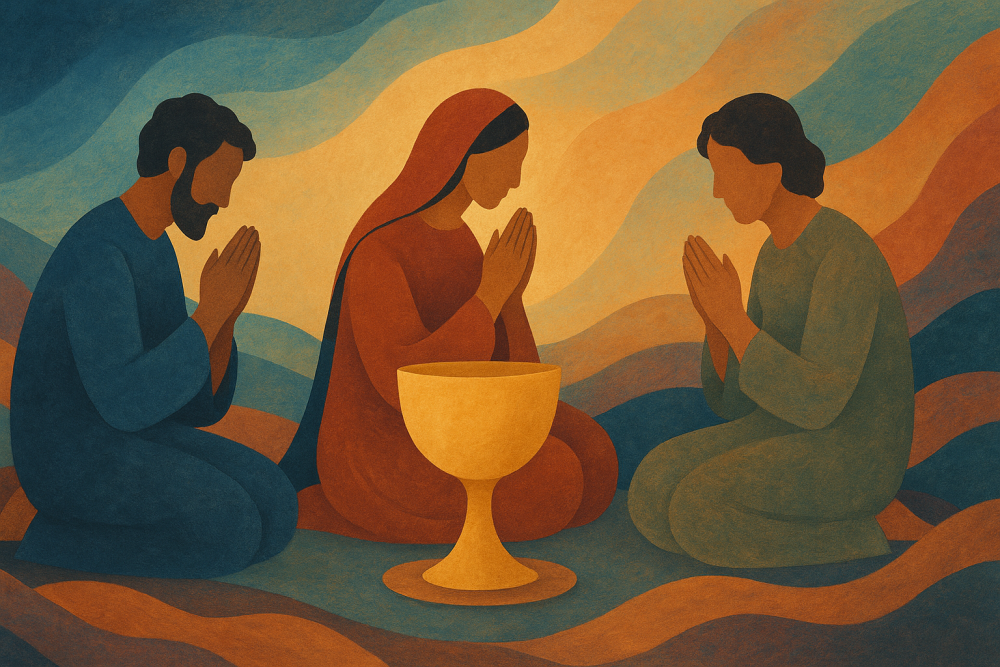
The earliest Christians placed huge importance on praying together. After Jesus returned to heaven, His followers began forming a new kind of community.
“They all joined together constantly in prayer…” (Acts 1:14)
Acts 1:14
This verse sets the tone: communal prayer happened frequently. The believers made prayer a regular group activity, not just a private discipline.
Where Did They Meet to Pray?
Homes
Early Christians gathered in private homes since official church buildings did not exist yet.
“he went to the house of Mary the mother of John, also called Mark, where many people had gathered and were praying” (Acts 12:12).
The Temple
In Jerusalem, they also met in the temple courts to pray together.
“Every day they continued to meet together in the temple courts. They broke bread in their homes and ate together with glad and sincere hearts” (Acts 2:46).
Acts 2:46
Outdoor Spaces
Sometimes prayer happened in open area, like when Paul met women at a river in Philippi
“On the Sabbath we went outside the city gate to the river, where we expected to find a place of prayer. We sat down and began to speak to the women.” (Acts 16:13).
Acts 16:13
How Did They Pray Together?
Here are several elements that defined their communal prayer:
United focus
hey prayed with “one accord” or a single intent. This means their prayers were marked by shared purpose and mutual encouragement.
Spoken prayers
Some prayers were spoken aloud together, sometimes spontaneously, other times following the pattern of Jewish prayers they all knew.
Singing and praise
Praise and singing often went hand in hand with prayer sessions.
Corporate needs
Prayers reflected the needs and hopes of the community, such as boldness in witness or support for persecuted members.
“When they heard this, they raised their voices together in prayer to God…” (Acts 4:24)
Acts 4:24
Did Early Christians Use Set Prayers?
While much was spontaneous, set prayers were also important. Many early Christians were faithful Jews and would use familiar psalms or blessings in group prayer. The “Lord’s Prayer” given by Jesus became one important model.
“When you pray, say: Father, hallowed be your name, your kingdom come…” (Luke 11:2)
Luke 11:2
This prayer provided words they could recite together and shape their prayer sessions around.
What Purposes Did Group Prayer Serve?
Group prayer was about more than requests. Here’s what communal prayer did for early Christians:
Strengthened unity: Praying together knit believers’ hearts as they poured out joys and sorrows.
Guided major decisions: Major events – like sending out missionaries or appointing leaders – were soaked in collective prayer.
Brought comfort: In times of fear or persecution, gathering for prayer brought peace and courage to the whole community.
Encounter the holy spirit: Often times the Holy Spirit would show in powerful ways, this would change people from the inside out.
“After they prayed, the place where they were meeting was shaken. And they were all filled with the Holy Spirit…” (Acts 4:31)
Acts 4:31
Did Ordinary People Participate?
Yes. Prayer was not just for leaders. Men and women, young and old, took part:
Women were present: Women are often mentioned by name as active members in prayer gatherings.
Everyone contributed: Paul’s letters often mention prayers “for all the saints” and encourage participation from the whole church.
Communal Prayer Outside Jerusalem
As Christianity spread, group prayer traveled with it. Paul urged all the believers to devote themselves to corporate prayer, from Corinth and Rome to Philippi and Colossae.
“Devote yourselves to prayer, being watchful and thankful.” (Colossians 4:2)
Colossians 4:2
The pattern: Find a place, gather fellow believers, pray together for God’s guidance and intercede for others’ needs.
Final thoughts
Communal prayer was the heartbeat of the early church. It shaped decisions, sustained faith and created a sense of deep belonging. When we gather to pray today, we stand in a long tradition that reaches all the way back to the first Christians.