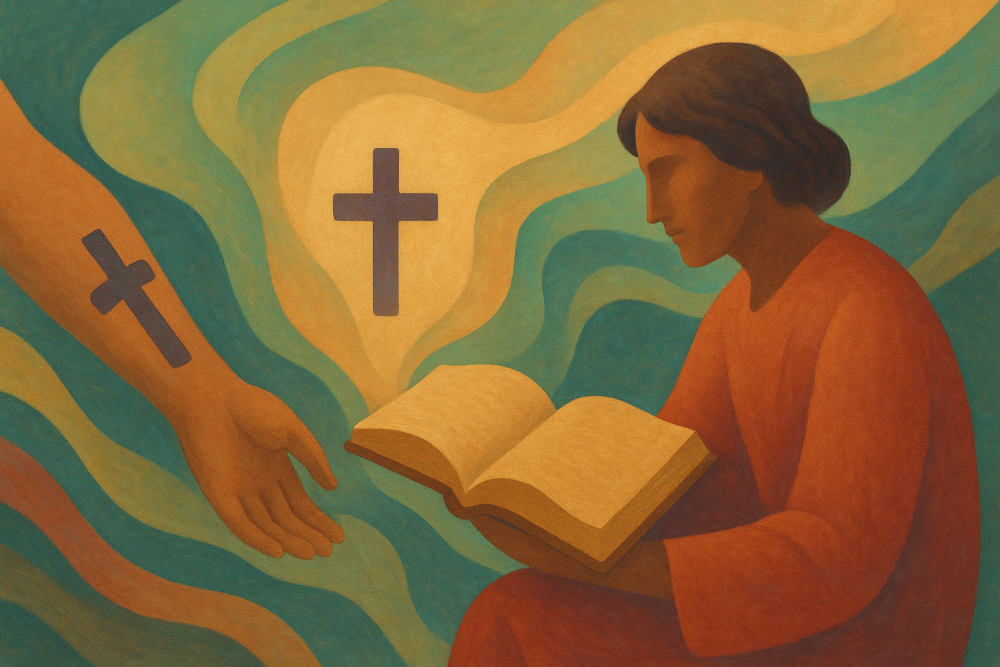
Does the Bible talk about Tattoos?
The short answer: yes, but only in one specific verse in the Old Testament. Let’s dig into what that verse says and why and see if there’s more to consider from a biblical viewpoint.
Old Testament Bible Verse about Tattoos
The Bible mentions tattoos in the book of Leviticus:
“Do not cut your bodies for the dead or put tattoo marks on yourselves. I am the Lord.” (Leviticus 19:28)
Leviticus 19:28
This is the only verse in the entire Bible that directly mentions tattooing or “tattoo marks.” But there’s important cultural and historical background to understand.
What Did Tattoos Mean in Ancient Times?
In the ancient world, tattooing was often linked to pagan religious practices. Marking or cutting your skin was associated with mourning the dead, keeping superstitious traditions, or claiming allegiance to other gods. The Israelites were called to look different from the surrounding nations. Leviticus 19 as a whole is full of instructions for Israel to be set apart.
- Tattooing here was tied to idolatrous worship and mourning rituals
- The command comes in a list of laws, some clearly moral, some ceremonial or cultural
Can a Christian get a Tattoo Today?
This is the big question for many of you. To answer it, keep a few things in mind:
- Leviticus was written to ancient Israel under the Old Covenant
- Christians generally don’t follow most ceremonial laws in Leviticus (like not wearing mixed fabrics or kosher food laws)
- The New Testament never mentions tattoos at all – positively or negatively
However, principles from Leviticus and other scriptures can guide how Christians think about tattoos today.
It’s wise to ask: am I honoring God with my body and choices?
New Testament Principles to Consider
The New Testament encourages believers to consider motives and the impact of their actions. Here are a few relevant passages:
“So whether you eat or drink or whatever you do, do it all for the glory of God.” (1 Corinthians 10:31)
1 Corinthians 10:31
“Do you not know that your bodies are temples of the Holy Spirit, who is in you, whom you have received from God? You are not your own;” (1 Corinthians 6:19)
1 Corinthians 6:19
The focus is less about external marks and more about the heart, motivation and whether an action honors God and serves others well.
How Do Different Christians View Tattoos?
Christians hold a range of views on tattoos:
- Some believe tattoos are always wrong based on Leviticus 19:28
- Many see the Old Testament command as not binding for believers but still consider issues like modesty, motives and cultural meaning
- Some embrace tattoos as neutral or even as ways to express faith, family, or meaningful events
The key is to decide with wisdom, conscience and love for God and neighbor. What message does your tattoo send? Why do you want one? Will it open doors or create barriers to loving others, loving God and sharing your faith?
Final thoughts
The Bible directly mentions tattoos only once, in the Old Testament, within a passage about pagan rituals. The New Testament gives principles Christians can apply: honor God, respect your body, examine your motives and care about your example to others. The answer isn’t always black and white. Christians have come to different conclusions and the decision comes down to your heart rather than the nature of your skin.
We don’t want to tell you exactly what to think but instead lay out what the Bible says in the light of its context. No matter what you choose, consider the scripture, pray about your motive and remember God cares deeply about your heart and your witness in the world.