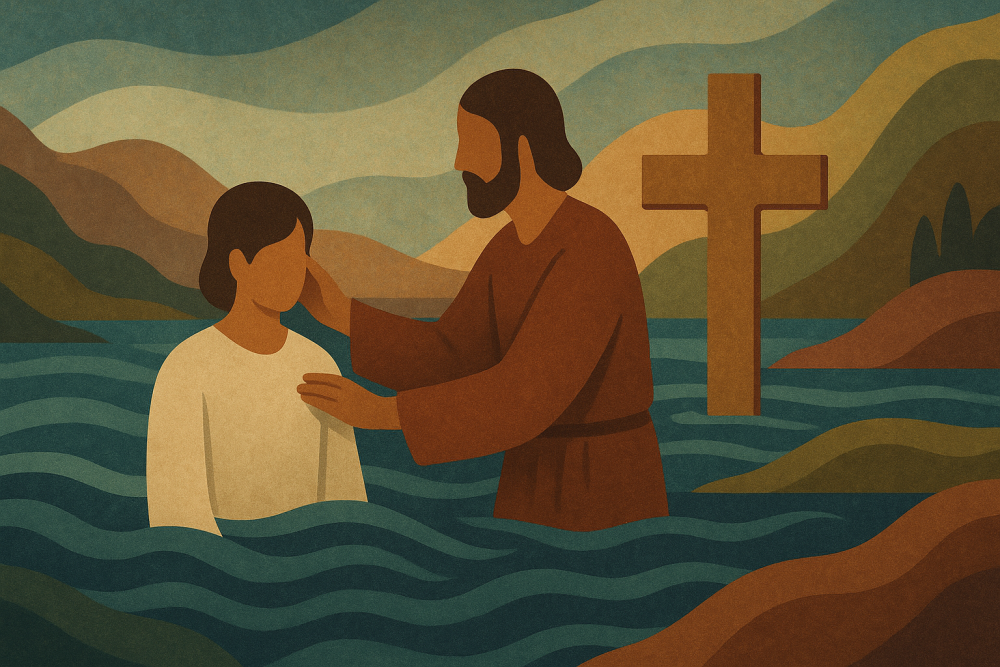
Baptism in the early church was a powerful and meaningful ritual, but it looked a bit different from many modern ceremonies that happen today. It was primarily a public declaration of faith, symbolizing a believer’s new life in Christ and their entrance into the Christian community.
Most often, baptism took the form of full immersion in water, reflecting the symbolism of death to sin and resurrection to new life. The early believers followed the example set by Jesus, who was baptized by John in the Jordan River:
“As soon as Jesus was baptized, he went up out of the water. At that moment heaven was opened, and he saw the Spirit of God descending like a dove and alighting on him.” (Matthew 3:16)
Matthew 3:16
Baptism before Jesus (mikveh)
However, baptisms already existed before Jesus! They took the form of Jewish ritual purifications (mikveh) for converts and restoring purity and John the Baptist adapted this immersion for his ministry of repentance, calling Israel to prepare for the Messiah by confessing sins and turning to God. This was foreshadowing the deeper spiritual cleansing Jesus would then bring.
These practices, rooted in Old Testament symbolism (like Noah’s flood, Red Sea, Jonah) used water for spiritual cleansing and marking new spiritual realities, setting the stage for Christian baptism.
Where Did Early Baptisms Take Place?
Early baptisms generally happened in natural bodies of water: rivers, lakes, or springs. These locations made full immersion practical. The clearest example of this would be John the Baptist who would baptise many in the River Jordan.
Although sometimes baptisms took place in private homes or enclosed baptisteries as Christianity grew, but the emphasis remained on dipping the entire body beneath the water.
Who Was Baptized and When?
In the earliest decades, baptism was reserved for those who made a conscious decision to follow Jesus. Converts, usually adults, underwent a period of instruction called catechesis before baptism. This process could last weeks or even months.
What is Catechesis?
Catechesis is the process of Christian religious instruction for new faith, teaching the core beliefs and practices of the faith, forming disciples and often using a catechism (Q&A manual) to explain doctrine.
Baptism marked the final step in becoming part of the Christian community.
Paul Explains Baptism
The Apostle Paul explained what baptism represented:
“We were therefore buried with him through baptism into death in order that, just as Christ was raised from the dead through the glory of the Father, we too may live a new life.” (Romans 6:4)
Romans 6:4
What Did Baptism Look Like in the Early Church?
Baptism wasn’t just about the water, there were other important rituals. It often included:
- Prayer and invocation: Asking for the Holy Spirit’s presence.
- Confession of faith: Affirming belief in Jesus.
- Clothing change: New converts sometimes wore white garments symbolizing purity and new life.
- Community celebration: Baptism was a public event, celebrating the new member joining the Body of Christ.
Was Baptism Linked to Repentance and Forgiveness?
Absolutely. Baptism in the early church signified more than just an introduction to Christianity. It was connected intimately to repentance from sin and spiritual cleansing. Peter’s words at Pentecost summarize this well:
“Repent and be baptized, every one of you, in the name of Jesus Christ for the forgiveness of your sins. And you will receive the gift of the Holy Spirit.” (Acts 2:38)
Acts 2:38
How Did Early Baptism Reflect Community and Identity?
Baptism was both personal and communal. It represented a radical transformation, turning away from the old way of life and joining a new family – the church. It was the moment when converts publicly identified with Christ’s death and resurrection and committed to living according to his teachings.
Baptism in the early church was about immersion in water, confession of faith, repentance, and receiving new life empowered by the Holy Spirit, so in meaning not far off what we do in churches today! It was a deeply symbolic act that marked a true life change within a supportive faith community.